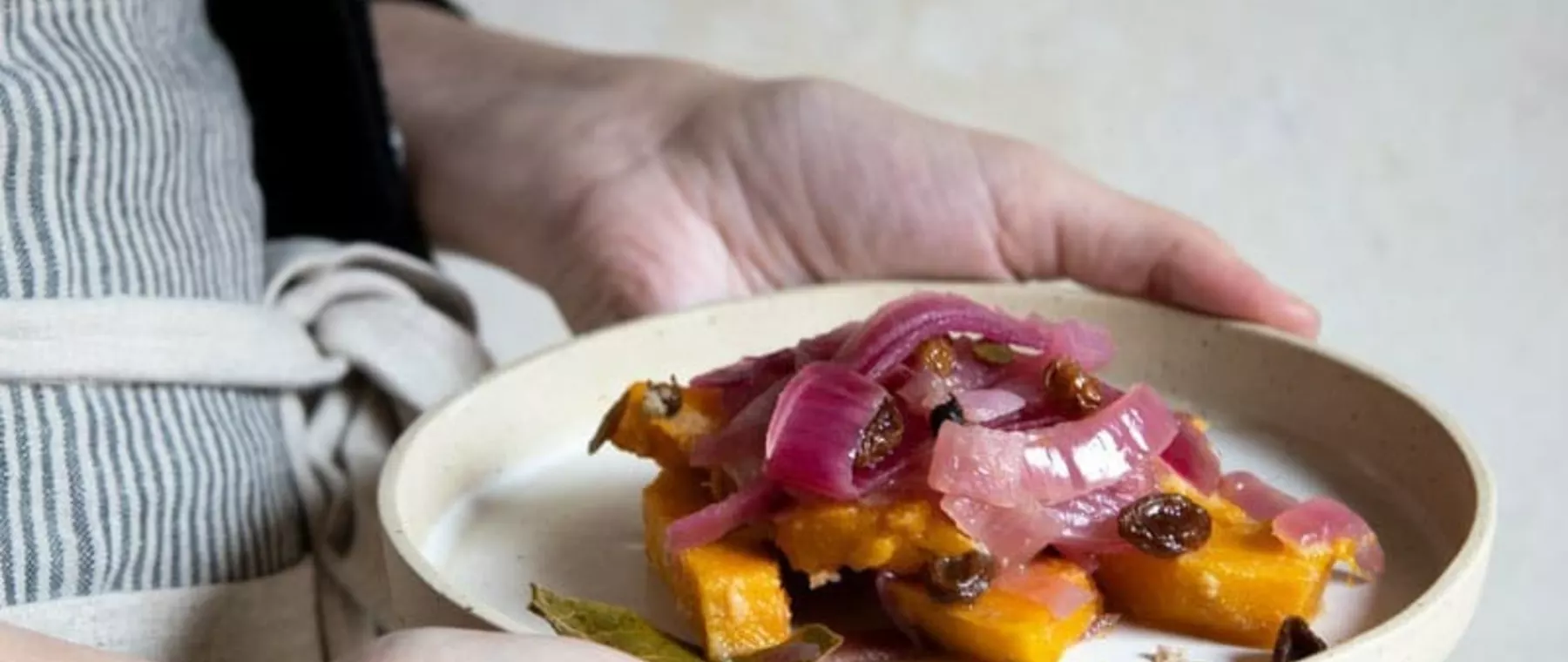
Saor is a classic Venetian dressing made with sweet and sour onions, used to flavour fish. Traditionally it's made with sardines and small soles (called sfogi), which are first floured and fried in very hot oil, then covered with white onion stewed with wine vinegar, sugar and spices. It all has to rest for a few days before you eat it.
I still remember it from when I was a child: at home they would tell you, with unshakeable pride, that saor should never be eaten before three days, or better still four, so that the flavours could blend perfectly. Every time my grandmother made it, it was a celebration. I sensed how special it was even though I was little and, as often happens with children, I didn't like certain intense flavours, which I only came to appreciate later.
This dish is a real piece of history.
Saor has its roots in the Middle Ages, when Venetian fishermen used it to preserve fish on long sea voyages. The vinegar kept it, while the sweetness of the raisins and pine nuts balanced the sharp, intense flavour that still fills the kitchen every time it's made. One of the earliest written records of a recipe like saor is in an anonymous 14th-century manuscript known as the Anonimo Veneziano (now kept in Rome, at the Biblioteca Casanatense). It describes a preparation called "cisame de pesse", considered the ancestor of modern saor. The recipe used fish dressed with onions, vinegar, honey and spices, with blanched almonds instead of pine nuts.
For years I've been making saor in a plant-based version, trying out variations with seasonal ingredients. In winter I use pumpkin or late Treviso red radicchio, while in summer I use round aubergines. I've even tried saor with celeriac and apple, a combination that turned out to be a real discovery!
Below is the recipe with pumpkin, but you can swap it for a celeriac of the same size or for 10 heads of radicchio, cut into quarters. I also like to vary the nut or seed: sometimes I replace the very expensive pine nuts with flaked almonds, a nod to the dish's ancestor from the days of the Serenissima, and other times I add pumpkin seeds, especially when the star ingredient is pumpkin (strictly Delica).
METHOD
Peel the onions, rinse them and cut them first in half and then into slices about 3-4 mm thick. Fry them in a non-stick pan (a wok is fine too) with the bay leaf and the peppercorns; salt them, deglaze with the vinegar and add the raisins. When the vinegar has evaporated, turn the heat right down and carry on cooking for about 30-40 minutes, adding a little water if needed. At the end, add the sugar and stir until it has completely dissolved, then turn off the heat and leave to rest.
The onions should be soft, with a little cooking liquid left. While the onion is cooking, wash and trim the pumpkin, cut it in half and then into slices 1 cm thick (if the pumpkin is organic, you can leave the skin on). Heat the groundnut oil to 180°C, flour the pumpkin and fry it 5-6 pieces at a time. As each batch is done, lift it out with a slotted spoon and lay it on kitchen paper. Salt it lightly. Once all the pumpkin is ready, leave it to cool. Take a glass or ceramic dish, spread a few spoonfuls of onion over the bottom, then arrange the pumpkin in a couple of even layers, and finally cover with the onion so that the pumpkin can no longer be seen. Decorate with the pine nuts, cover with cling film or a lid and leave it to rest in the fridge for at least 24 hours before eating.
Photo credits Nicoletta Fornaro